Product Mix for Construction Sites Vending Machines
What to stock in a construction sites machine: core range, products to avoid and rotation discipline.
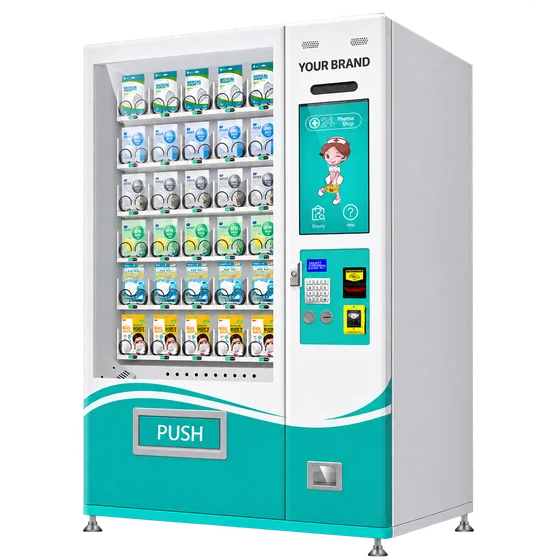
Illustrated FCV configuration. View FCV-D720-10C(22SP) PPE Vending Machine. Confirm product fit and supplied options in your quotation.
- Free planning resources
- Checklists you can use today
- Survey available when you are ready
Indicative model — the final machine is confirmed after a site survey or compatibility test.
Construction Sites needs a location-specific vending plan. Use actual package samples to build the proposed range. Test the starting assortment against workforce by shift and protected welfare cabins, then confirm storage, delivery and collection for the selected configuration. A pack-by-pack starting range and an accepted loading plan for the selected configuration.
Your construction sites brief / product mix
Build the assortment around the actual package.
A pack-by-pack starting range and an accepted loading plan for the selected configuration. Keep the inputs specific to the proposed location.
Bring these inputs
A useful conversation starts here.
- Which packs will be tested?
- Separate refreshments from any proposed PPE or tool-issue requirement; test each package
- What changes the starting range?
- Use workforce by shift and protected welfare cabins to test your assumptions. Record dimensions, weight and storage conditions for each candidate product.
- Who accepts the loading plan?
- Name the product owner and record the selected model, mechanism, pack test and any limits before placing an order.
A starting assortment to test for construction sites
Identify the workforce present on each shift and the people authorised to use the proposed machine. Review shift overlaps, short breaks and the hours the replenishment team can enter and the proposed protected location, servicing route, site moves and exposure conditions. For construction sites, the existing planning brief highlights workforce by shift and protected welfare cabins; use that as an input to check at the site, not as proof of demand or suitability.
Core range to start with
High-rotation staples
The everyday items within water, filling snacks and approved PPE that form a proposed core range; actual turnover and shelf life still need monitoring.
Hydration
Water and soft drinks are the backbone of almost every UAE machine, whatever the venue.
Occasion items
Products matched to the specific construction sites audience — chosen during the survey, not guessed.
A small test block
A few facings reserved for new products so the range keeps learning.
Products that need care at this site
Heat-sensitive items
Chocolate and similar lines need machines with reliable cooling — relevant across the UAE summer.
Short-dated fresh lines
Only viable where turnover justifies near-daily replenishment — decide from the survey, not enthusiasm.
Items limited by dust, temporary power and site moves
Site rules or physical constraints can rule out certain sizes, formats or categories entirely.
Labelling-sensitive lines
Allergens, dietary categories and any products the site owner restricts must be agreed upfront.
Packaging and dispensing checks
Before a product is listed we confirm it physically vends: coil or conveyor compatibility, pack rigidity, dimensions and drop behaviour. A product that jams is worse than an empty spiral — it generates complaints and refunds at your cost.
Rotation and restock rhythm
Restocking at construction sites is planned around workforce by shift and protected welfare cabins — replenishing before peak periods rather than after them, rotating by expiry date, and reviewing the range monthly. Slow lines are swapped out; fast lines get extra facings. Under fully managed vending this rhythm is handled by FCV; under self-operation it is part of your weekly round.
Machines commonly shortlisted for construction sites
Indicative models — the final recommendation follows a site survey and dispensing tests.


Machine guide / FCV-M072
Six-layer spring-slot cabinet and drop check
The exact D720 parameter documents six layers with ten spring slots per layer. The page separately illustrates a guarded PUSH collection opening and infrared drop inspection.
- Published slot configuration
- The matching parameter explicitly says 6 layers*10 slots spring. Lane widths and product depths still require the selected configuration.
- Collection path
- Products are delivered to the guarded lower pickup area; the source illustrates infrared drop detection.
- Check the package against the configured spring slot.
- Select and pay through the configured interface.
- The spring slot releases the product towards the lower pickup area.
- Collect through the PUSH door after delivery indication.
Frequently Asked Questions
Related Pages
Discuss a Product-Mix Pilot
Book a site assessment for your construction sites location — we survey demand, placement and permissions and send a written proposal covering the three operating arrangements.
Project enquiry · Ownership and service terms confirmed in writing