Machine Placement at Factory Dormitories: Position Guide
Where a vending machine performs at factory dormitories — position checklist, service access and mistakes to avoid.
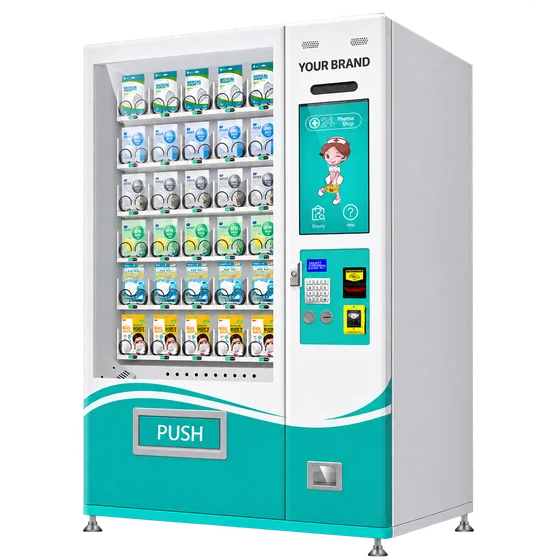
Illustrated FCV configuration. View FCV-D720-10C(22SP) PPE Vending Machine. Confirm product fit and supplied options in your quotation.
- Free planning resources
- Checklists you can use today
- Survey available when you are ready
Indicative model — the final machine is confirmed after a site survey or compatibility test.
Factory Dormitories needs a location-specific vending plan. Work from the complete delivery route to the exact proposed position. Record linked factory and dormitory meal schedules, then confirm the space needed to operate, restock and service the selected assembly. A dimensioned placement brief covering access, utilities, service and the agreed location.
Your factory dormitories brief / placement
Plan the route, the position and the service space.
A dimensioned placement brief covering access, utilities, service and the agreed location. Keep the inputs specific to the proposed location.
Bring these inputs
A useful conversation starts here.
- How will the cabinet arrive?
- Measure the complete route, including doors, lifts, turns and the proposed unloading position; use the selected assembly dimensions.
- Can it be operated and serviced here?
- The proposed protected location, servicing route, site moves and exposure conditions
- Which local constraint needs a decision?
- Resolve linked factory and dormitory meal schedules for factory dormitories. Record any unresolved access, power or connectivity item on the site brief.
Candidate positions to assess at factory dormitories
Identify the workforce present on each shift and the people authorised to use the proposed machine. Review shift overlaps, short breaks and the hours the replenishment team can enter and the proposed protected location, servicing route, site moves and exposure conditions. For factory dormitories, the existing planning brief highlights canteen hours versus dormitory return times; use that as an input to check at the site, not as proof of demand or suitability.
Placement checklist — what we verify on site
Footfall, not floor space
Position on the route people actually walk — measured against canteen hours versus dormitory return times.
Physical clearances
Door swing, ventilation space, trolley access for restocking and safe egress for everyone else.
Power position
A dedicated socket within reach — extension leads across walkways are not a plan.
Payment signal
Mobile data or Wi-Fi at the exact position for cashless payments and telemetry.
Environment
Record heat, dust and splash exposure at the proposed position. Confirm environmental protection for the selected equipment rather than assuming outdoor suitability.
Service access — the overlooked half of placement
A machine that sells well but cannot be restocked efficiently becomes a liability. At factory dormitories, linked factory and dormitory meal schedules often dictates when and how servicing happens, so we check the service route — vehicle access, doors, lifts, security sign-in — before confirming a spot.
Permissions and safety
- Written sign-off from the person or body controlling the space
- No obstruction of fire exits, accessible routes or signage
- Stable, level floor; anchoring where the environment demands it
- Cable routing that creates no trip hazard
- Any site-specific rules raised in the survey written into the plan
Placement issues to resolve before approval
The convenient corner
Siting the machine where it is easy to put, not where people pass — the most common error.
Hidden in plain sight
Blocked sightlines, poor lighting or a machine that faces the wrong direction.
The unserviceable spot
Positions that look fine to users but cannot be reached for restocking without disruption.
Outdoor without protection
Direct sun and dust exposure degrading performance and presentation.
Machines commonly shortlisted for factory dormitories
Indicative models — the final recommendation follows a site survey and dispensing tests.


Machine guide / FCV-M072
Six-layer spring-slot cabinet and drop check
The exact D720 parameter documents six layers with ten spring slots per layer. The page separately illustrates a guarded PUSH collection opening and infrared drop inspection.
- Published slot configuration
- The matching parameter explicitly says 6 layers*10 slots spring. Lane widths and product depths still require the selected configuration.
- Collection path
- Products are delivered to the guarded lower pickup area; the source illustrates infrared drop detection.
- Check the package against the configured spring slot.
- Select and pay through the configured interface.
- The spring slot releases the product towards the lower pickup area.
- Collect through the PUSH door after delivery indication.
Frequently Asked Questions
Related Pages
Book a Placement Survey
Book a site assessment for your factory dormitories location — we survey demand, placement and permissions and send a written proposal covering the three operating arrangements.
Project enquiry · Ownership and service terms confirmed in writing