Is Vending Feasible at Labour Camps? Site Checklist
Demand signals, survey checks and honest go/no-go criteria for vending at labour camps.
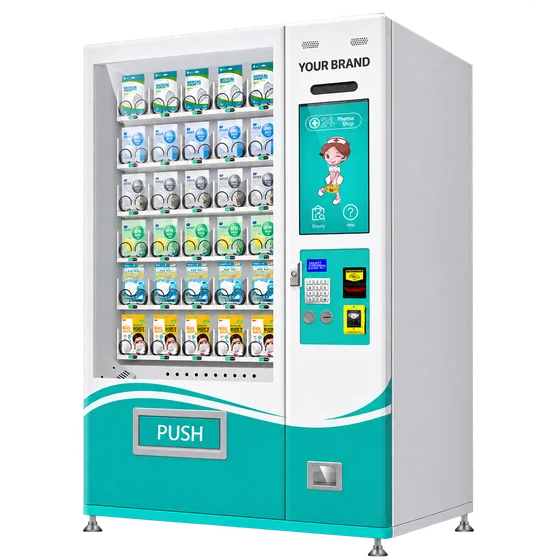
Illustrated FCV configuration. View FCV-D720-10C(22SP) PPE Vending Machine. Confirm product fit and supplied options in your quotation.
- Free planning resources
- Checklists you can use today
- Survey available when you are ready
Indicative model — the final machine is confirmed after a site survey or compatibility test.
Labour Camps needs a location-specific vending plan. Measure resident counts and cash-payment needs before deciding what to install. Separate observed demand from assumptions, compare existing alternatives and resolve price sensitivity and clustered shift returns. A measured location brief with assumptions, missing inputs and a clear next decision.
Your labour camps brief / feasibility
Turn a promising location into a testable brief.
A measured location brief with assumptions, missing inputs and a clear next decision. Keep the inputs specific to the proposed location.
Bring these inputs
A useful conversation starts here.
- Who is actually there?
- The workforce present on each shift and the people authorised to use the proposed machine
- When is the gap?
- Shift overlaps, short breaks and the hours the replenishment team can enter
- What is specific to this site?
- Record resident counts and cash-payment needs. Check price sensitivity and clustered shift returns at the actual proposed position.
Demand signals worth measuring first
Identify the workforce present on each shift and the people authorised to use the proposed machine. Review shift overlaps, short breaks and the hours the replenishment team can enter and the proposed protected location, servicing route, site moves and exposure conditions. For labour camps, the existing planning brief highlights resident counts and cash-payment needs; use that as an input to check at the site, not as proof of demand or suitability.
People volume
Count the real number behind resident counts and cash-payment needs across a full week, not just a busy Tuesday.
Daypart spread
When demand peaks and whether evenings, nights or weekends still produce sales.
Competing supply
Nearest shop, cafeteria or existing machine — distance and opening hours decide your real competition.
Dwell and access
Whether people pause near the machine or pass it at walking pace with no time to stop.
Site survey checklist for labour camps
Demand evidence
Measured or estimated figures for resident counts and cash-payment needs, with the assumptions written down.
The constraint, verified
Confirm how price sensitivity and clustered shift returns plays out physically at the candidate location — measure, don't guess.
Power and data
Working socket position and payment/telemetry signal at the exact spot.
Service route
How a restock or engineer reaches the machine — trolley width, lifts, security, parking.
Sign-off
Written approval from whoever controls the space before anything is installed.
Scenario planning — illustrative example
Every site is different, but modelling three scenarios before you buy keeps the decision honest. The figures below are illustrative only — your survey replaces them with site-specific estimates.
- Low case — modest demand: sales cover stock and upkeep but owner share stays small; viability depends on contract terms and machine cost
- Illustrative steady-demand scenario: use measured sales, agreed replenishment access and the actual contracted revenue-share rate; do not assume the maximum rate.
- High case — strong demand: capacity becomes the constraint; larger or additional machines and more frequent servicing enter the conversation
Honest reasons a labour camps site may not qualify
- Resident counts and cash-payment needs too low or too concentrated in one daypart to support stock turnover
- Price sensitivity and clustered shift returns leaves no compliant position for the machine
- A nearby shop or existing machine already absorbs the demand
- Permissions are refused or conditions make the economics unworkable
From survey to decision
If the survey supports vending at your labour camps site, compare outright self-operation, a fixed monthly FCV service using products you provide, and fully managed vending. Eligible fully managed arrangements offer up to 25% of contract-defined monthly gross sales. Confirm the actual rate, equipment ownership, funding and service responsibilities before committing.
Machines commonly shortlisted for labour camps
Indicative models — the final recommendation follows a site survey and dispensing tests.


Machine guide / FCV-M072
Six-layer spring-slot cabinet and drop check
The exact D720 parameter documents six layers with ten spring slots per layer. The page separately illustrates a guarded PUSH collection opening and infrared drop inspection.
- Published slot configuration
- The matching parameter explicitly says 6 layers*10 slots spring. Lane widths and product depths still require the selected configuration.
- Collection path
- Products are delivered to the guarded lower pickup area; the source illustrates infrared drop detection.
- Check the package against the configured spring slot.
- Select and pay through the configured interface.
- The spring slot releases the product towards the lower pickup area.
- Collect through the PUSH door after delivery indication.
Frequently Asked Questions
Related Pages
Request a Site Feasibility Review
Book a site assessment for your labour camps location — we survey demand, placement and permissions and send a written proposal covering the three operating arrangements.
Project enquiry · Ownership and service terms confirmed in writing